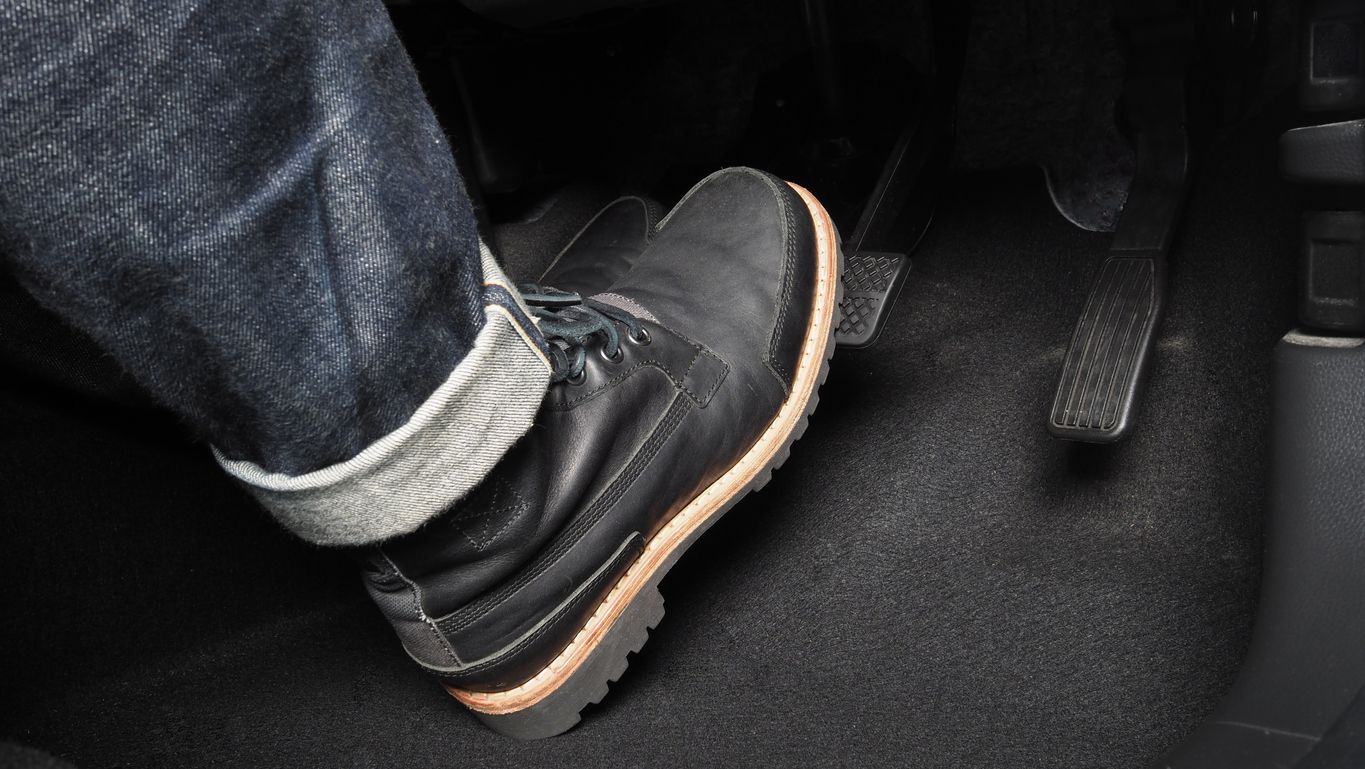
When you hit the brakes, you expect your car to come to a stop. That vital motion depends on brake fluid, a small but mighty part of your vehicle’s braking system. But like oil or coolant, brake fluid doesn’t last forever. It can absorb moisture over time, making the fluid less effective at doing its job – meaning you won’t be able to stop as quickly as you might need to when it matters most.
But how do you know when to replace your brake fluid and what does bad brake fluid look like? Let’s take a closer look at why brake fluid goes bad, how to recognize the signs it might be time for a tune-up, and when to replace it so you can be confident your brakes are at their full stopping power.
Why Brake Fluid Doesn’t Last Forever
Brake fluid is hygroscopic, meaning it naturally absorbs water from the air. Even in a sealed system, humidity can squeeze its way in through tiny openings in hoses, seals, or the reservoir cap. Over time, that moisture can change how well the fluid performs. As the water content increases, it can cause vapor pockets during hard braking, making it less smooth and take longer to stop. Watered-down fluid can also corrode your brake lines, calipers, and the master cylinder – leading to potentially costly repairs you likely want to avoid.
A few things can wear down your brake fluid faster:
- Regular heat cycles: Each time you drive, the braking system heats up. When the car cools down, the components contract again. These temperature swings can cause the brake system to expand and contract, allowing small amounts of air or moisture to seep in over time.
- Stop-and-go driving: Frequent braking, such as in heavy traffic or city driving, puts constant stress on the fluid, raising its temperature and accelerating chemical breakdown.
- Hilly terrain: Driving on steep roads means using the brakes more frequently and for longer periods, which causes extra heat buildup and accelerated fluid wear.
- Humid climates: Moisture in the air can gradually seep into the brake system, diluting the fluid and reducing performance.
Does Brake Fluid Need to Be Replaced?
Replacing brake fluid is not optional maintenance. Most manufacturers recommend servicing brake fluid every two to three years, although specific timelines vary by vehicle and driving conditions. Check your owner’s manual to see what your automaker recommends.
What Does Bad Brake Fluid Look Like
Fresh brake fluid has a clear to light amber color. Once it absorbs moisture or becomes contaminated, it may turn dark, cloudy, or brown. While discoloration is an easy visual clue, fluid can become ineffective before it looks dirty which is why mileage- or time-based replacements are so important.
How to Tell if Brake Fluid Is Bad
Bad brake fluid symptoms don’t show up all at once. Here are a few signs that your brake fluid might be past its best:
- Soft or spongy pedal: A pedal that sinks or feels loose can point to air or moisture in the system.
- Longer stopping distances: Contaminated fluid can weaken hydraulic pressure, resulting in longer stopping distances.
- Brake warning light: The light can appear when fluid levels drop or when the system senses an issue.
- Dark or cloudy fluid: Fresh brake fluid is typically clear to pale yellow. If it’s brown or dirty, it’s likely time for replacement.
Any of these signs is a cue to get your braking system checked before small issues turn into serious safety concerns.
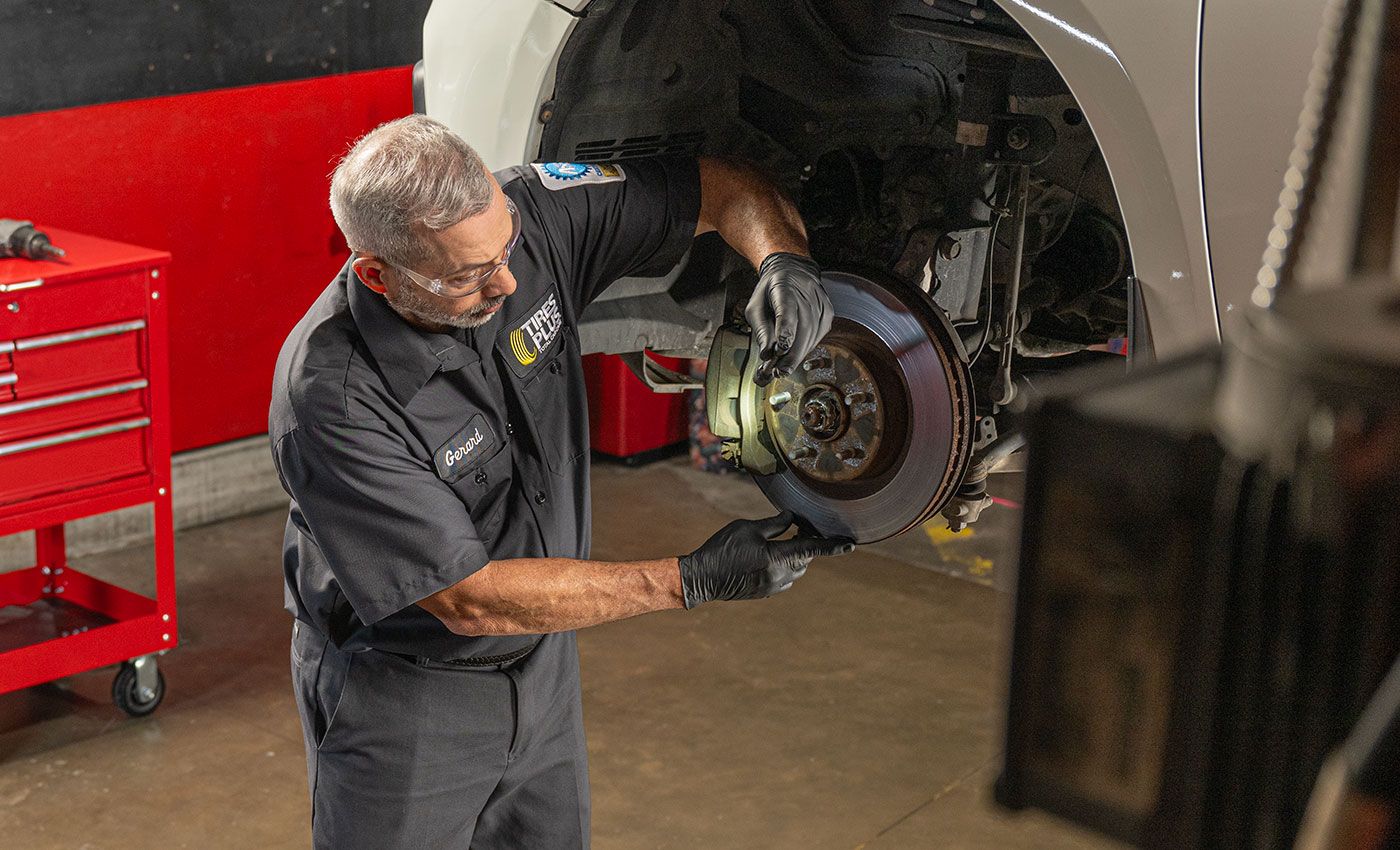
If you’re noticing any of these problems, you should have your brake fluid quality tested by a trusted automotive professional. The qualified technicians at Tires Plus can test your brake fluid and replace it with the right type for your vehicle.
Keep Your Braking System Strong
Brake fluid might not get as much attention as brake pads or rotors, but it’s just as important. When it wears out, your ability to stop safely can fade with it.
If your brake pedal feels soft or slow to respond, your fluid could be past its prime. Visit Tires Plus for a professional brake inspection and fluid service to keep your braking system responsive and strong. Schedule your brake service today.
Brake Fluid FAQs
How often should brake fluid be changed?
Most vehicles benefit from a brake fluid change every 2–3 years. Check your owner’s manual, then confirm with a Tires Plus technician based on your driving habits.
What kind of brake fluid do I need?
Your owner’s manual or the cap on your brake fluid reservoir should indicate DOT 3, DOT 4, or DOT 5.1. The right type depends on your braking system. If unsure, Tires Plus will ensure the right formula is used.
How much does it cost to change brake fluid?
Brake fluid change pricing varies depending on your specific brake system and the fluid type it requires. Contact your nearest Tires Plus for a transparent estimate tailored to your vehicle.
What color should brake fluid be?
Clean brake fluid should appear clear or light amber. If it looks dark, murky, or brown, this may indicate age or contamination.
How long does it take to change brake fluid?
Most brake fluid replacement services take about 30 to 60 minutes, depending on the vehicle, condition of the system, and any additional brake maintenance needed.
Does brake fluid expire?
Yes, brake fluid does expire. Over time, it absorbs moisture, which lowers its boiling point and reduces performance. A sealed bottle can last for years, but once opened, it is best used within a few months to maintain quality.